
British rail, decoded for American travelers
Twenty-odd operators, four fare types, seven Railcards, a legal split-ticketing system and a booking window that opens twelve weeks out. It is genuinely confusing — and that confusion is expensive.
Skyward Bookings is an independent rail travel information service and is not affiliated with, endorsed by or sponsored by Amtrak, VIA Rail or any railway operator. Disclaimer
The five things that cost Americans money in Britain
- Booking too early or too late. Advance fares release roughly twelve weeks before departure and the cheapest tier often sells out within days. Six months out you cannot buy them at all; two days out they are gone.
- Not buying a Railcard. A third off most fares for a modest annual cost. The Two Together and Senior Railcards typically repay themselves on one long journey.
- Not splitting the ticket. Entirely legal, published in the National Rail Conditions of Travel, and routinely 20–40% cheaper on long routes.
- Buying the wrong ticket type. Advance fares are locked to one train. If your inbound flight is late, that ticket is worthless. Off-Peak and Anytime cost more and are worth it when your schedule is uncertain.
- Accepting a collection code instead of an e-ticket. Some fares issue as a code requiring a station machine and the original payment card. Arriving on a red-eye at 6am with a code and no machine open is a real problem.
Ticket types, explained
Advance — cheapest, tied to a specific train, non-refundable, released about twelve weeks out. Off-Peak — valid on any train outside peak hours, changeable, moderately priced. Anytime — valid on any train at any time, fully flexible, expensive. Super Off-Peak — an even cheaper restricted version on some routes.
Seat reservations are free and separate from the ticket on most operators. Always take one on long journeys — an unreserved seat on a Friday afternoon out of Euston means standing.
How split ticketing works
British fares are priced per flow, not per mile, and the flows were built up piecemeal over decades. A London–Edinburgh ticket is one product; a London–York ticket plus a York–Edinburgh ticket are two separate products. There is no rule that they must add up sensibly, and frequently they do not.
The National Rail Conditions of Travel permit combining tickets provided the train calls at every station where you split. You do not have to leave the train or change seats. This is a published rule, not a loophole.
Where the savings actually are
London–Edinburgh split at York or Newcastle commonly saves 20–35%. London–Penzance can exceed 40%. Short journeys usually save nothing. Our agents test the split on every UK quote and recommend it only when the saving is real and the risk is low.
Operators are not competitors in the way you expect
Most British routes are run by a single franchised operator, so there is no choice to make. But on the East Coast Main Line, LNER, Lumo and Grand Central all run London–Edinburgh with wildly different pricing. On London–Birmingham, Avanti is fast and London Northwestern is slow and much cheaper. Knowing which routes have genuine competition is where the money is.
What is genuinely wonderful about British rail
Frequency. Four trains an hour between Edinburgh and Glasgow. Three an hour London to Manchester. Turn-up-and-go on most urban routes. Dogs travel free without a carrier. First Class often costs less than walk-up Standard and includes a proper meal. And the scenic lines — Settle to Carlisle, the West Highland Line to Mallaig, the Cambrian Coast — are among the finest railway journeys anywhere.
The routes Americans ask for most
Every guide includes timings, operators, stops, which side to sit on and where the split-ticket savings are.
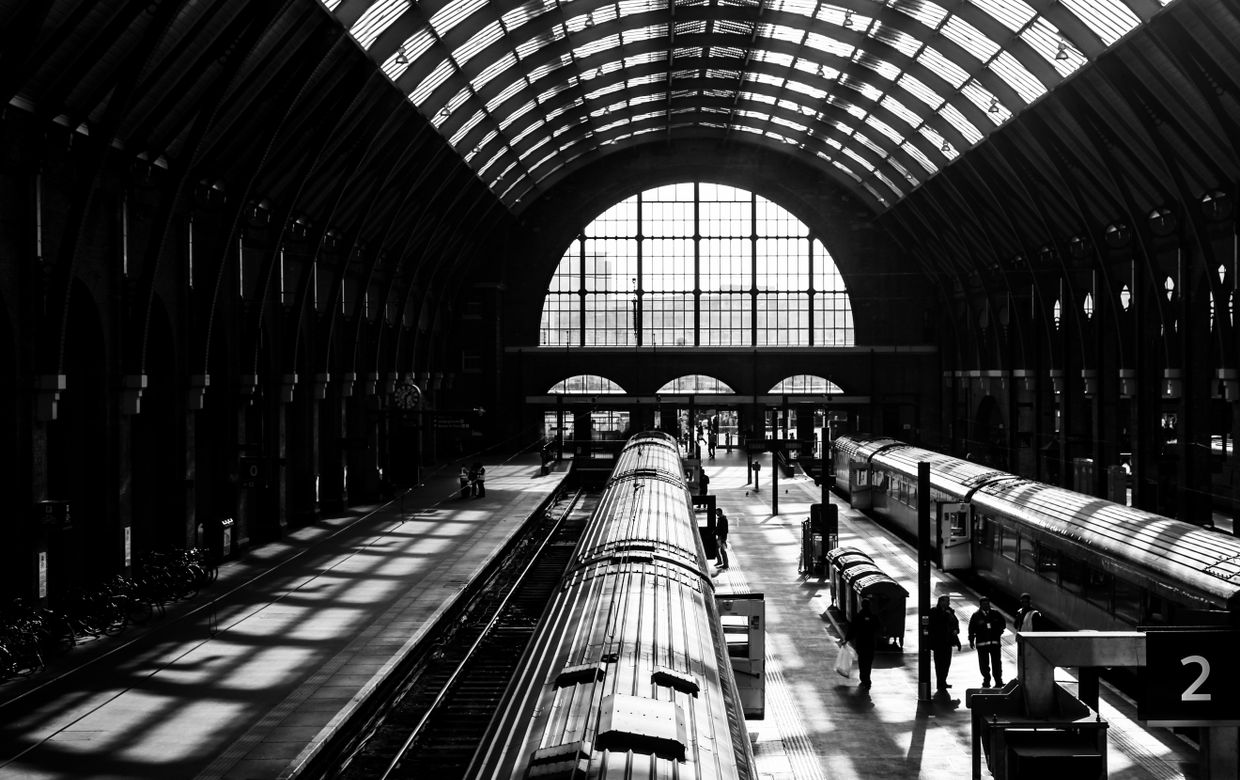 4h 20m
London to Edinburgh
The East Coast Main Line is Britain's great scenic express route — Durham Cathedral from the viaduct, the Northumberland coast…
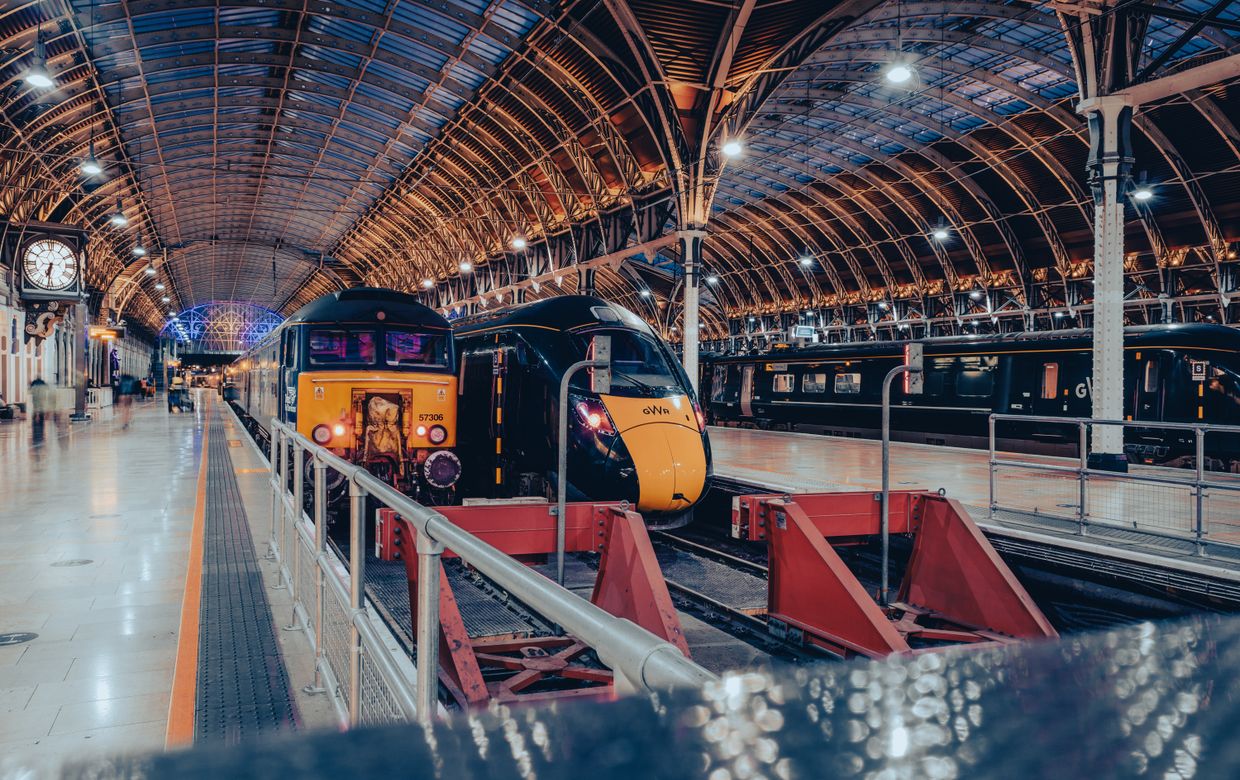 2h 07m
London to Manchester
The busiest long-distance city pair in Britain, with tilting Pendolino trains running the West Coast Main Line through the Trent…
 4h 30m
London to Glasgow
Over Shap Fell and Beattock Summit, past the Lake District fells and the Southern Uplands. Or take the Caledonian Sleeper…
 2h 13m
London to Leeds
Fast East Coast running to West Yorkshire, with Grand Central offering an open-access alternative at often dramatically lower fares.
 1h 22m
London to Birmingham
Britain's shortest major intercity hop, with a fast Avanti service and a slower, far cheaper London Northwestern alternative via Northampton.
1h 25mLondon to Bristol
Brunel's Great Western Main Line, now fully electrified as far as Bristol Parkway, running through the Thames Valley and the…
1h 50mLondon to Cardiff
Through the Severn Tunnel into Wales — under two hours from Paddington to the Welsh capital.
 2h 12m
London to Liverpool
West Coast Main Line express to Merseyside, arriving at the magnificent trainshed of Lime Street in the heart of the…
 1h 51m
London to York
Under two hours to one of Europe's most complete medieval cities — and the home of the National Railway Museum.
Where British journeys begin
 KGX
KGXLondon King's Cross
12 platforms · opened 1852
 EUS
EUSLondon Euston
16 platforms · opened 1837
 PAD
PADLondon Paddington
14 platforms · opened 1854
 STP
STPLondon St Pancras International
15 platforms · opened 1868
 VIC
VICLondon Victoria
19 platforms · opened 1860
 MAN
MANManchester Piccadilly
14 platforms · opened 1842
EDBEdinburgh Waverley
20 platforms · opened 1846
 GLC
GLCGlasgow Central
15 platforms · opened 1879
